
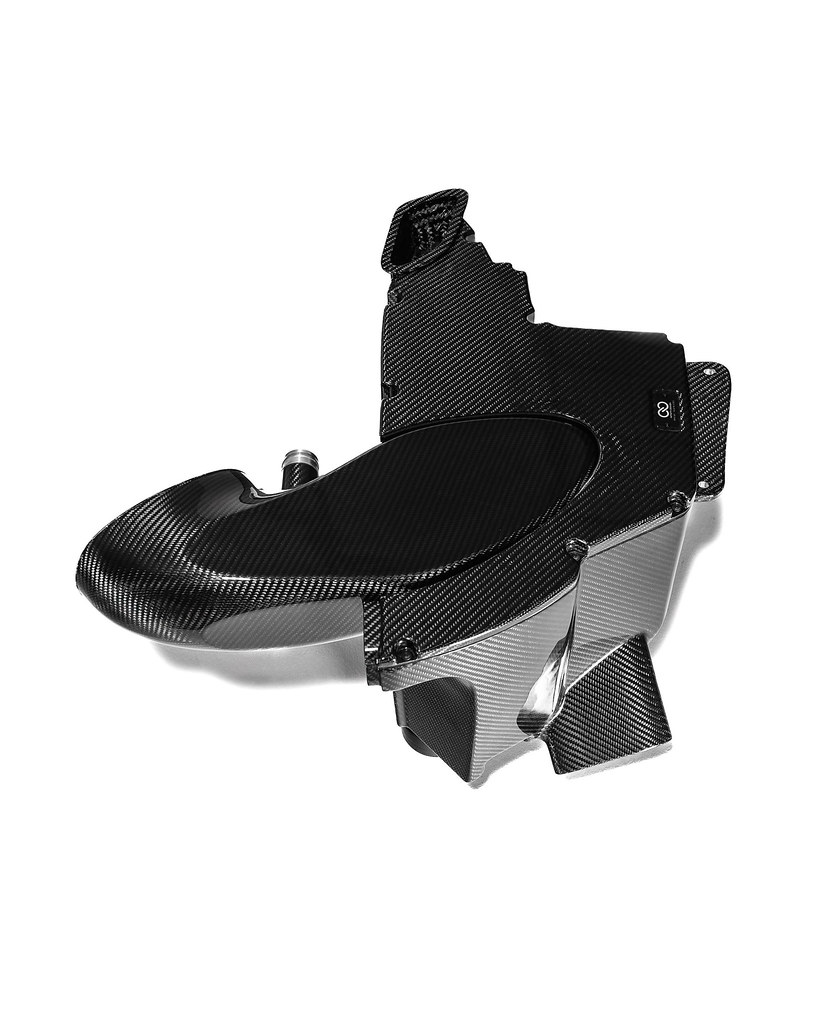
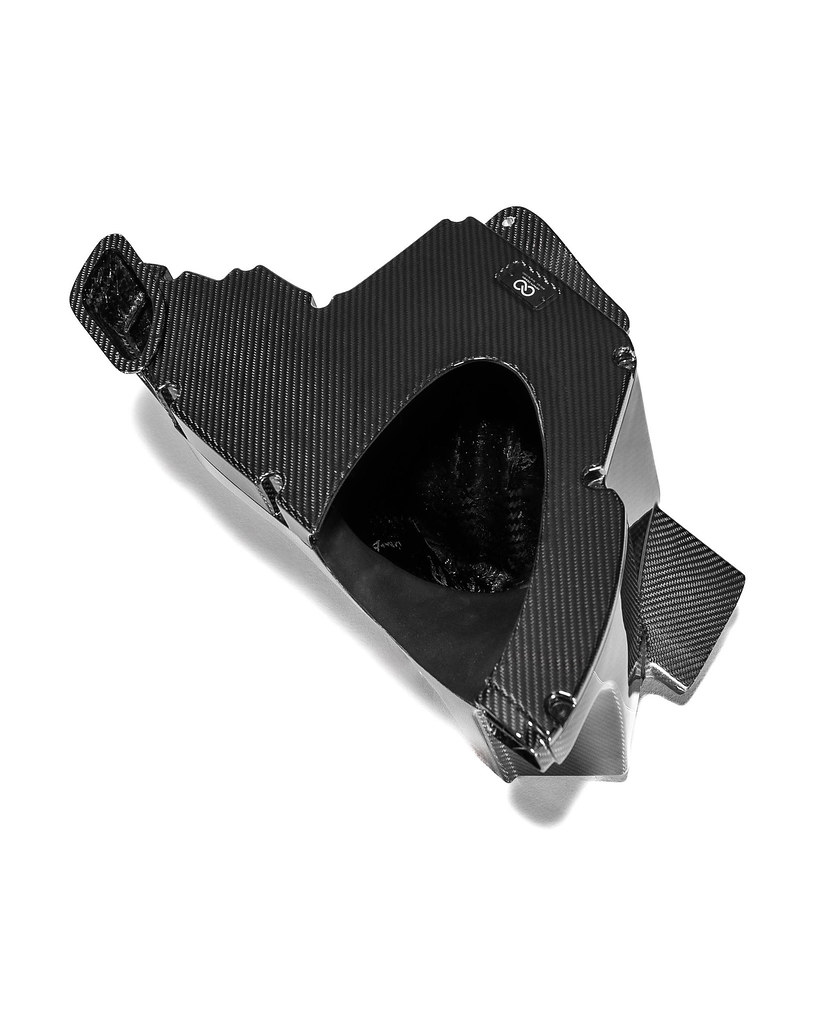
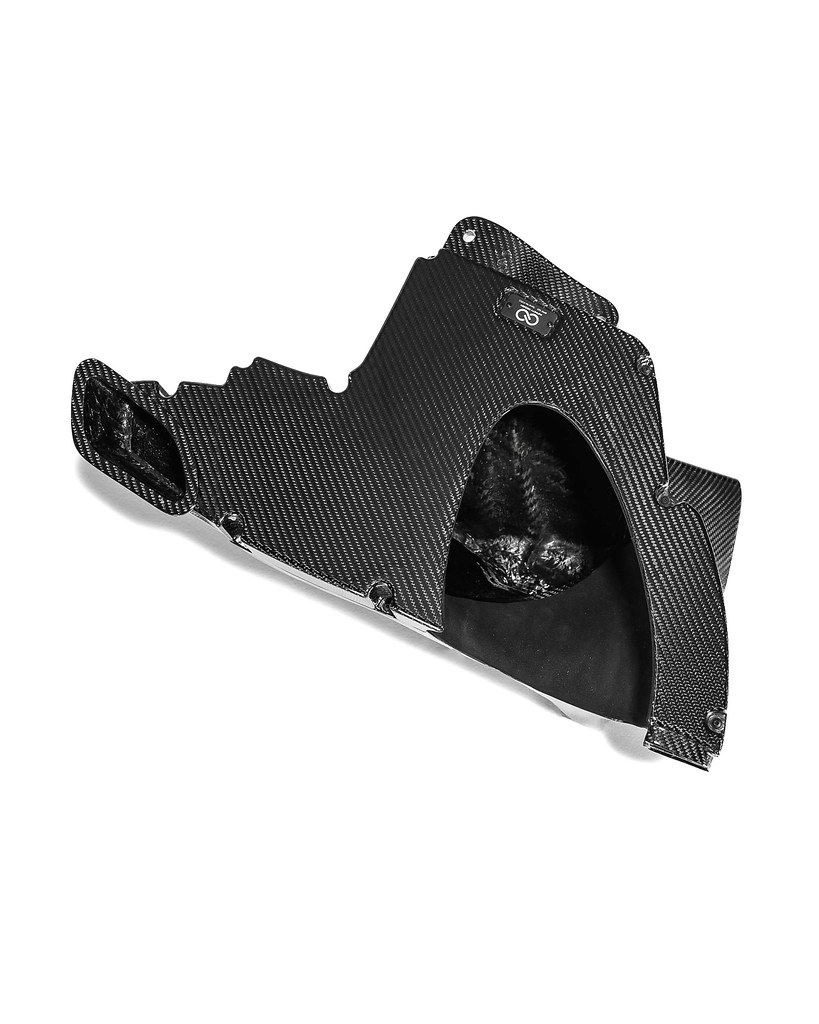
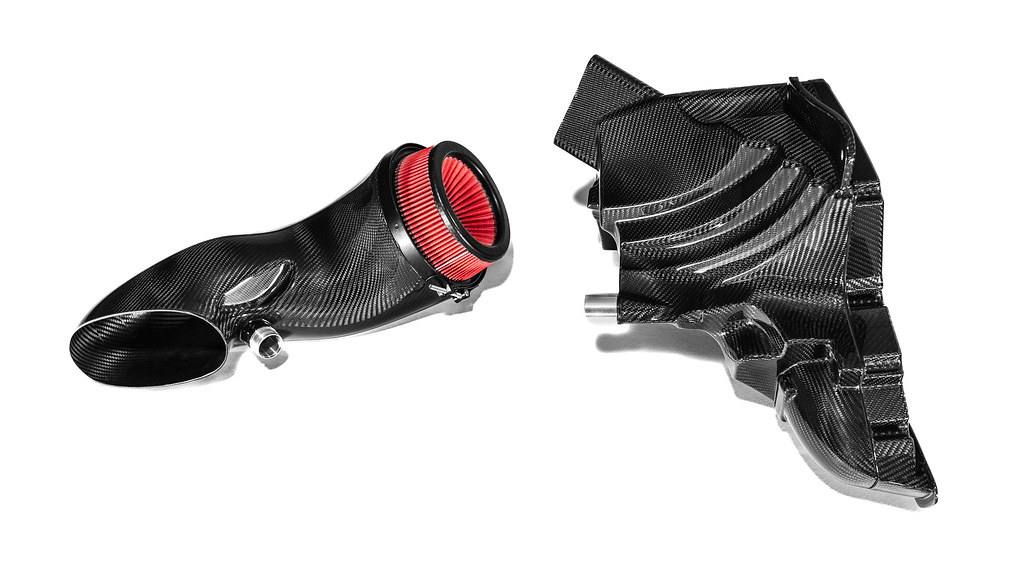
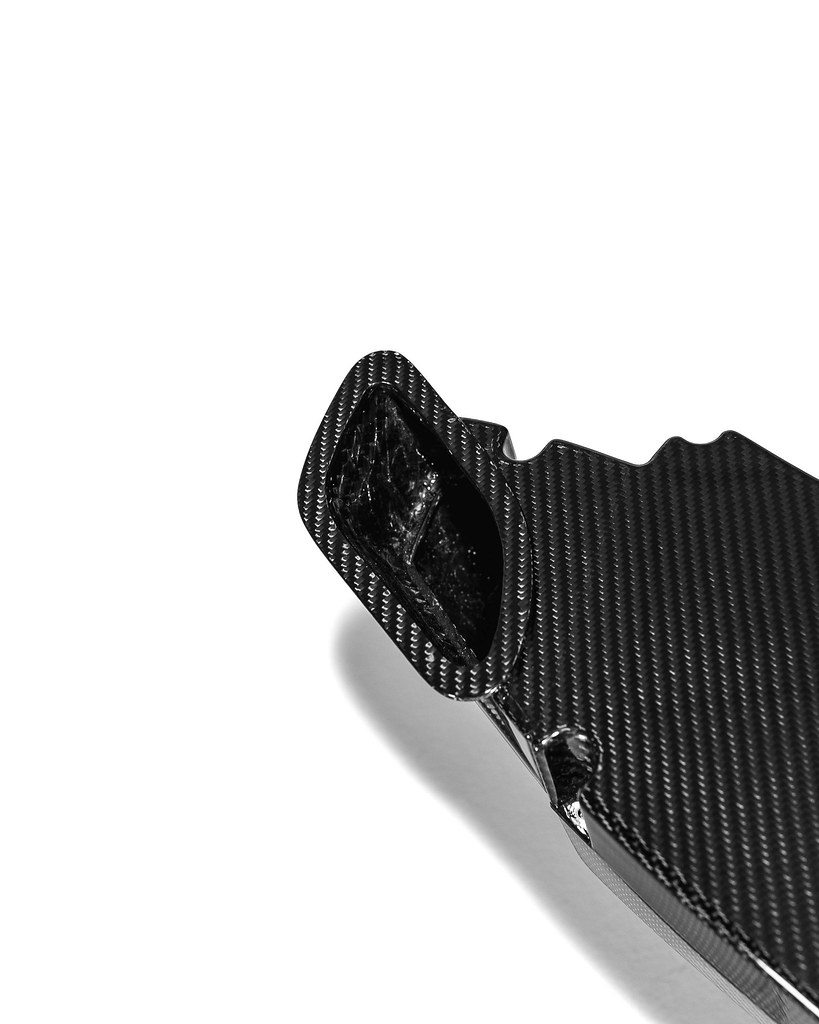
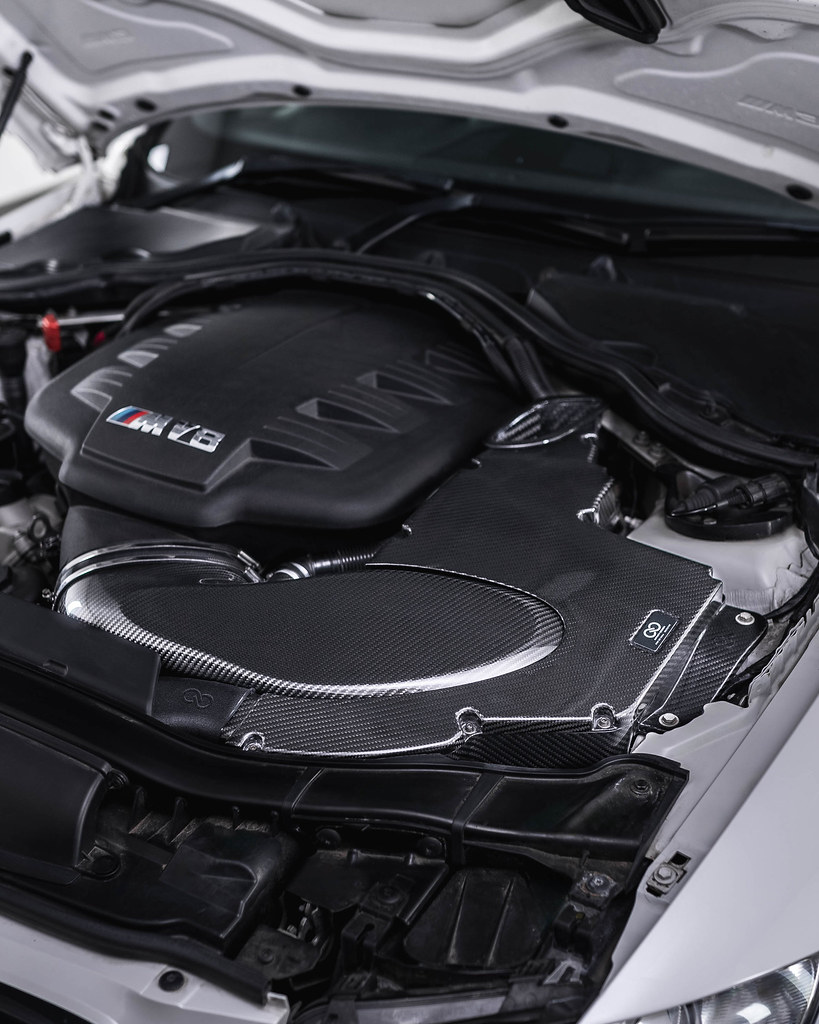
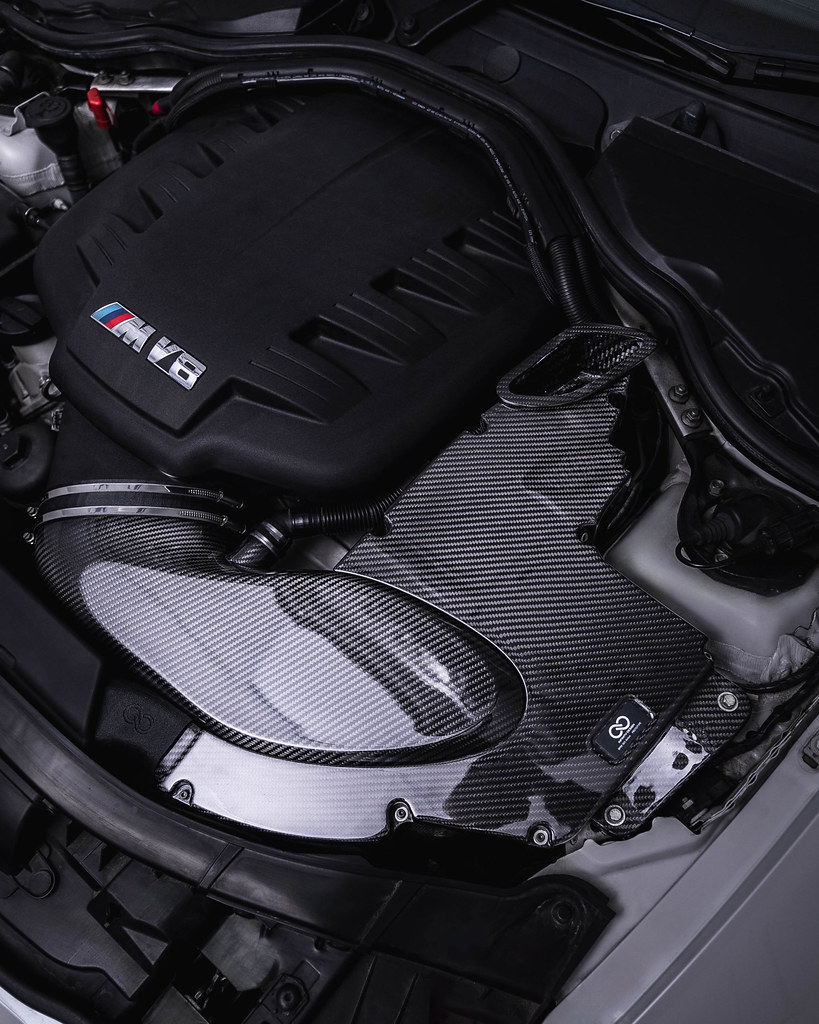
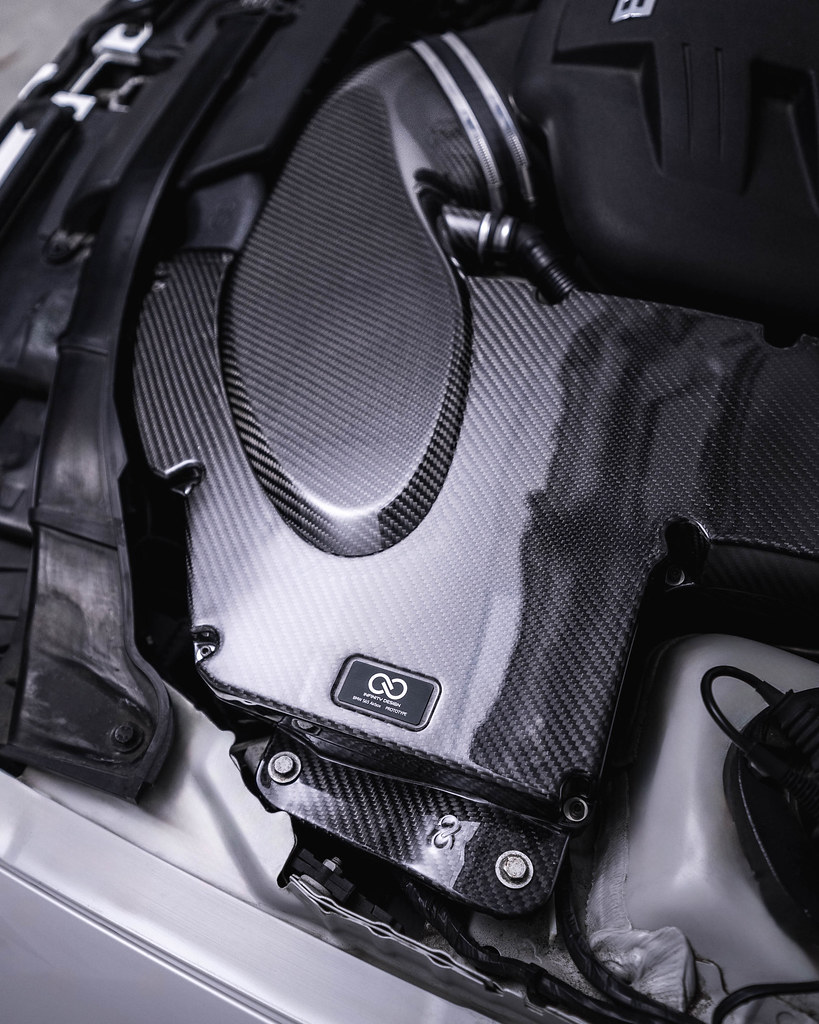
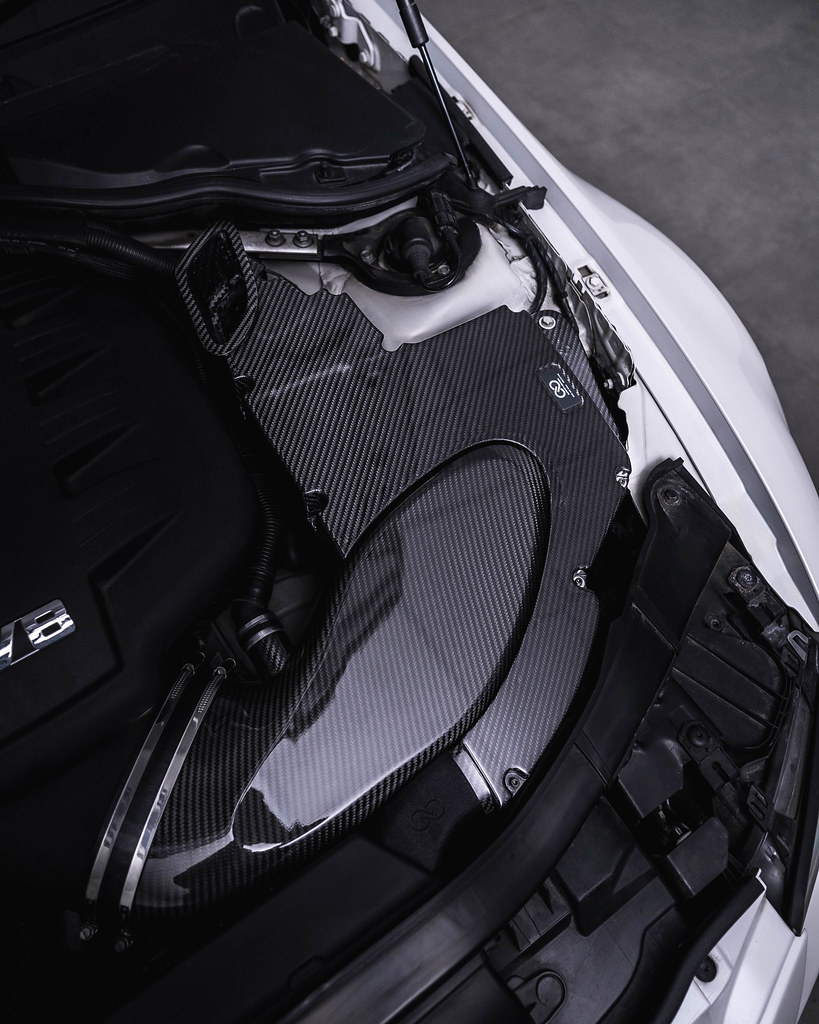
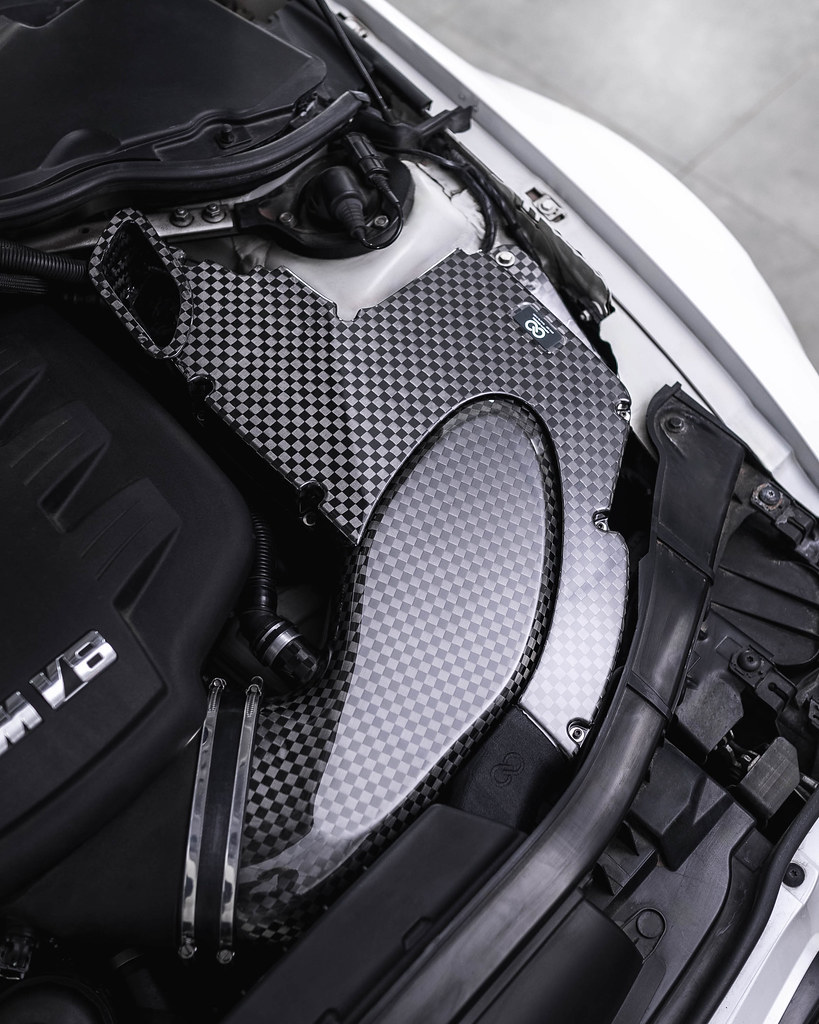
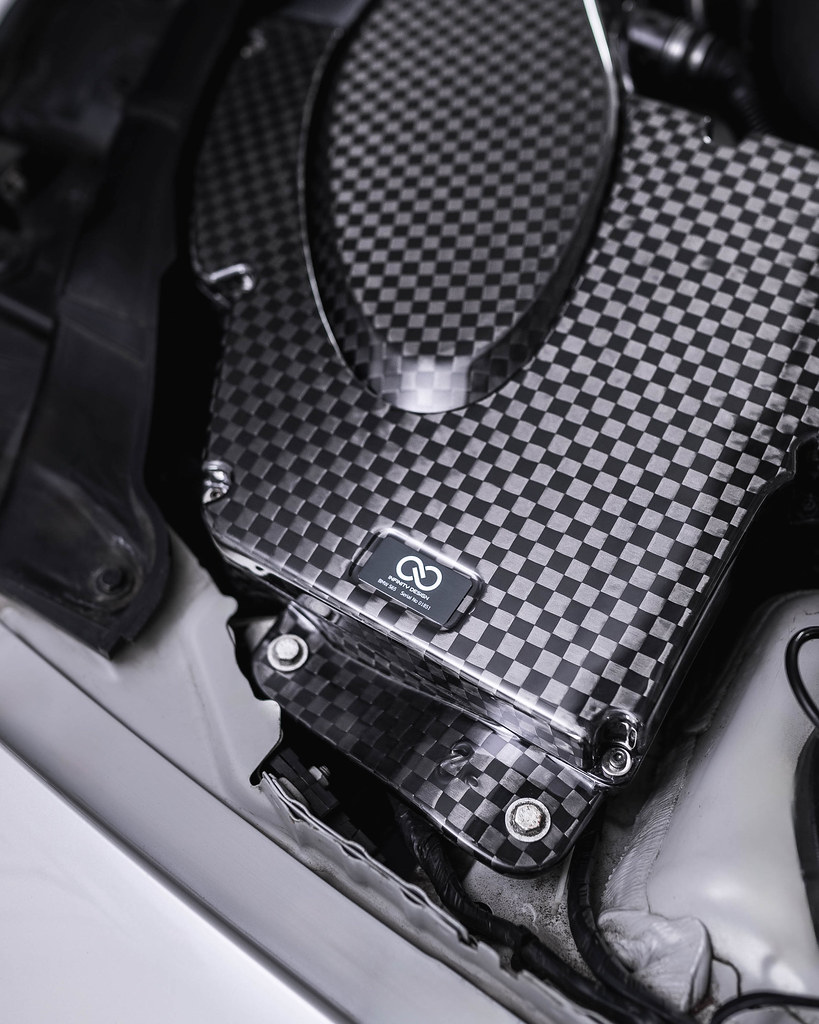
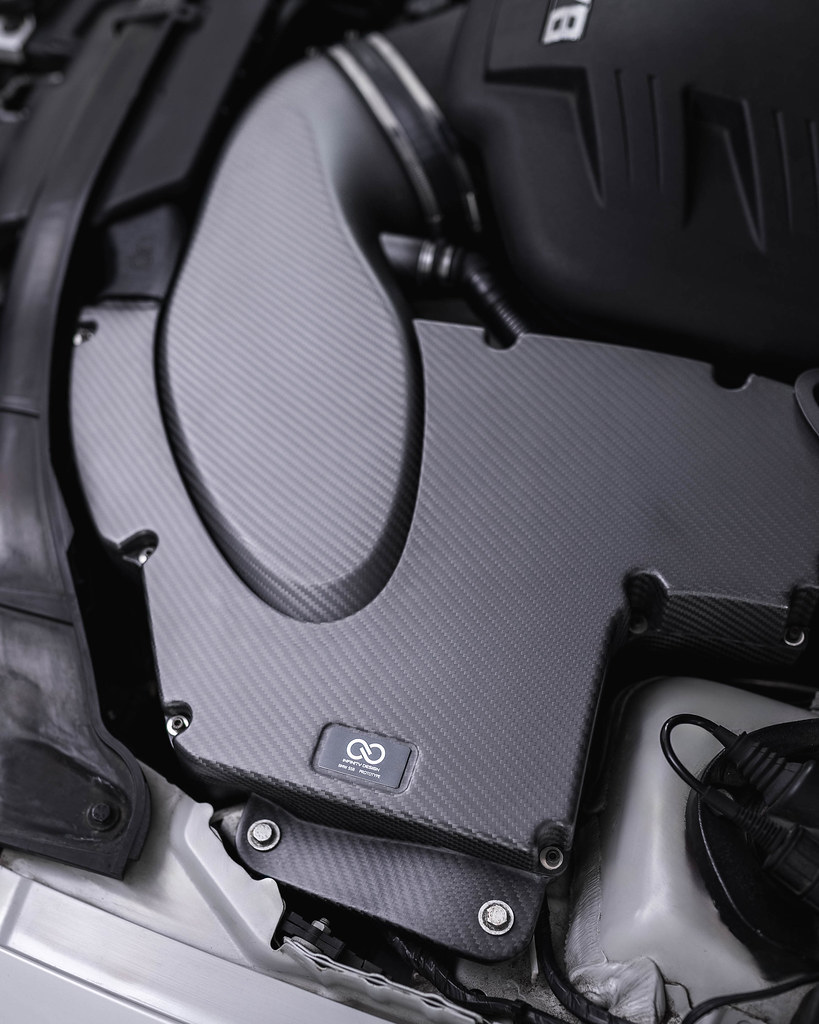
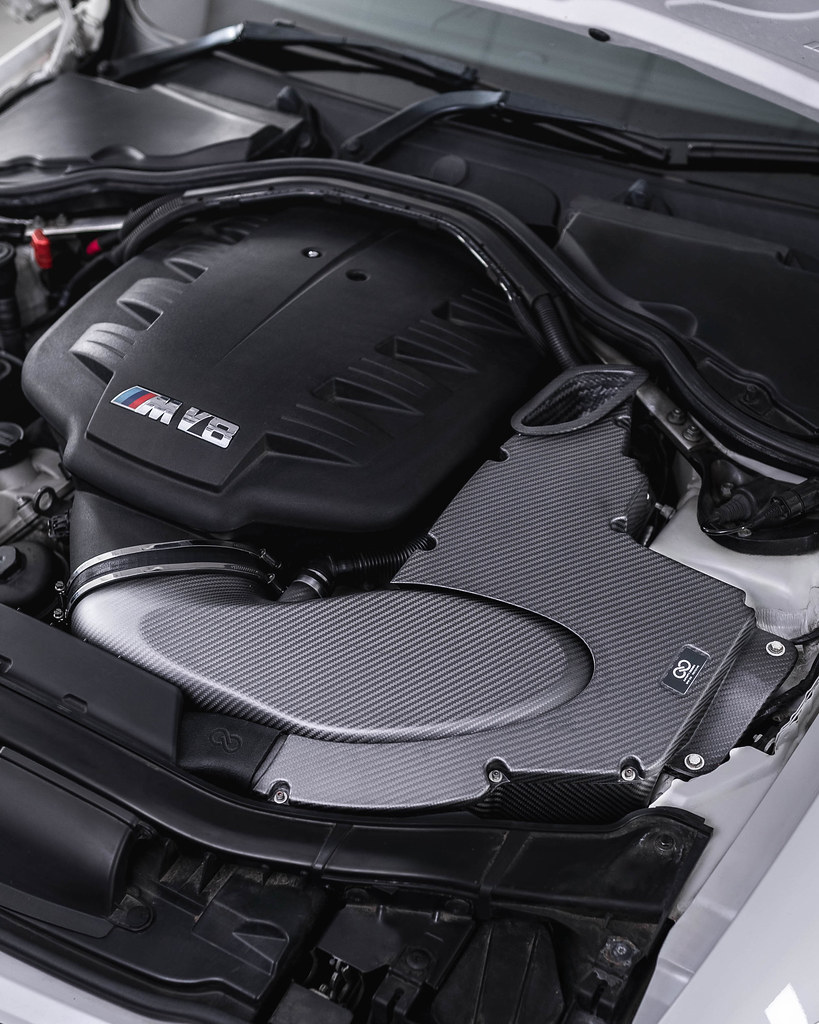
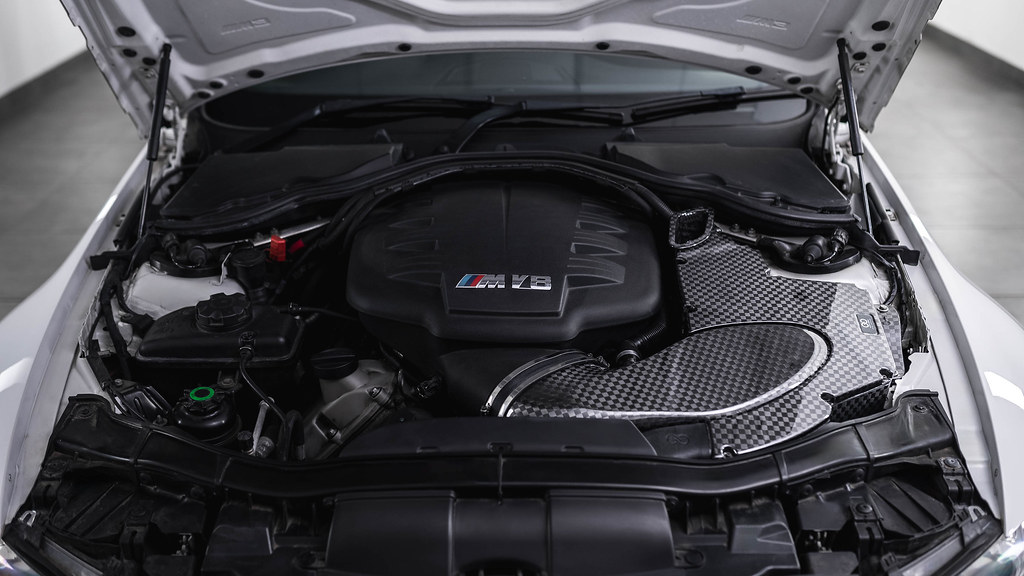
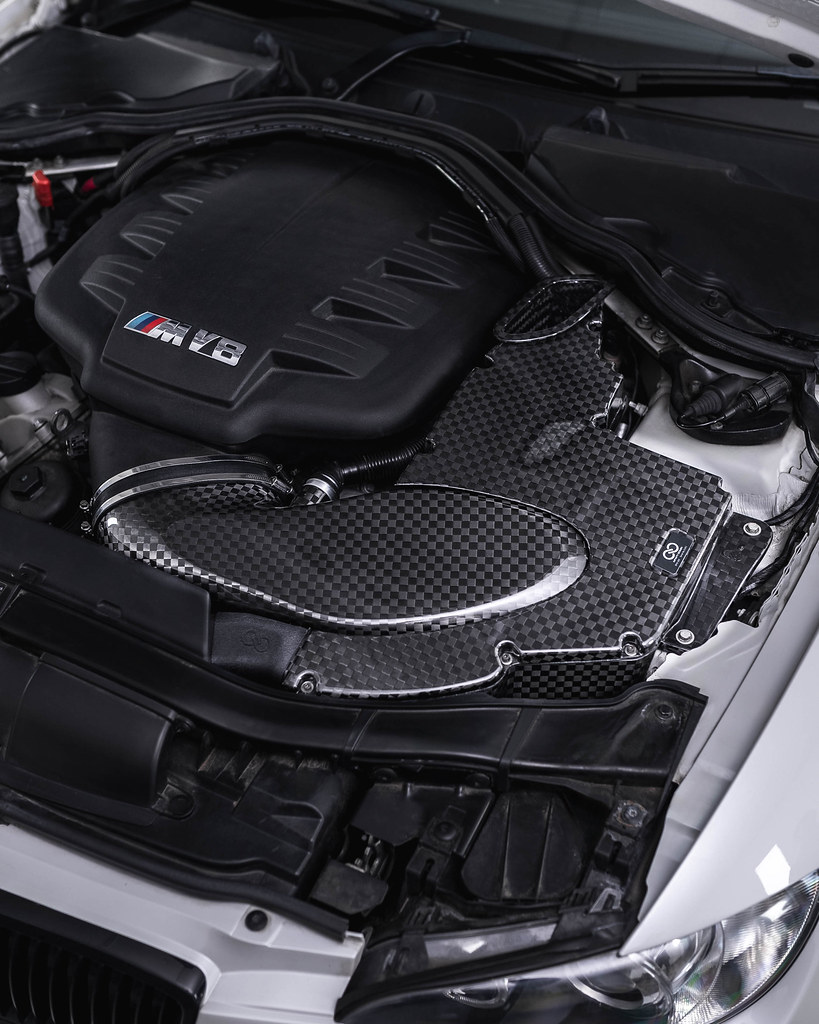
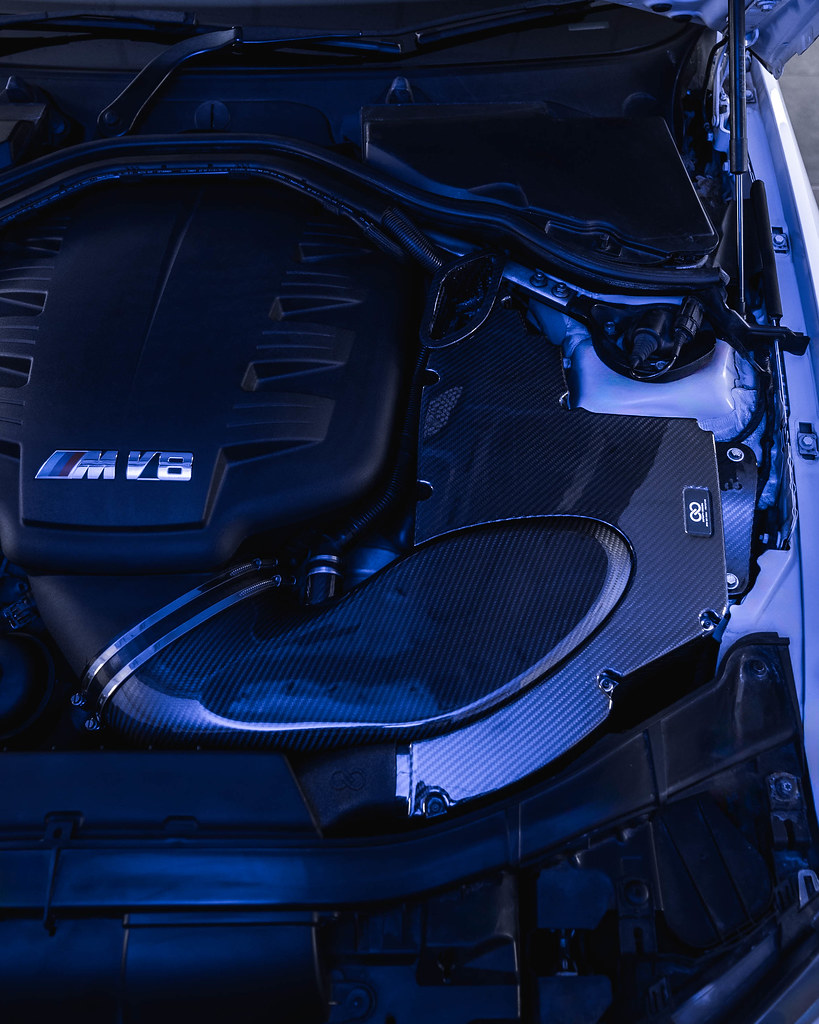
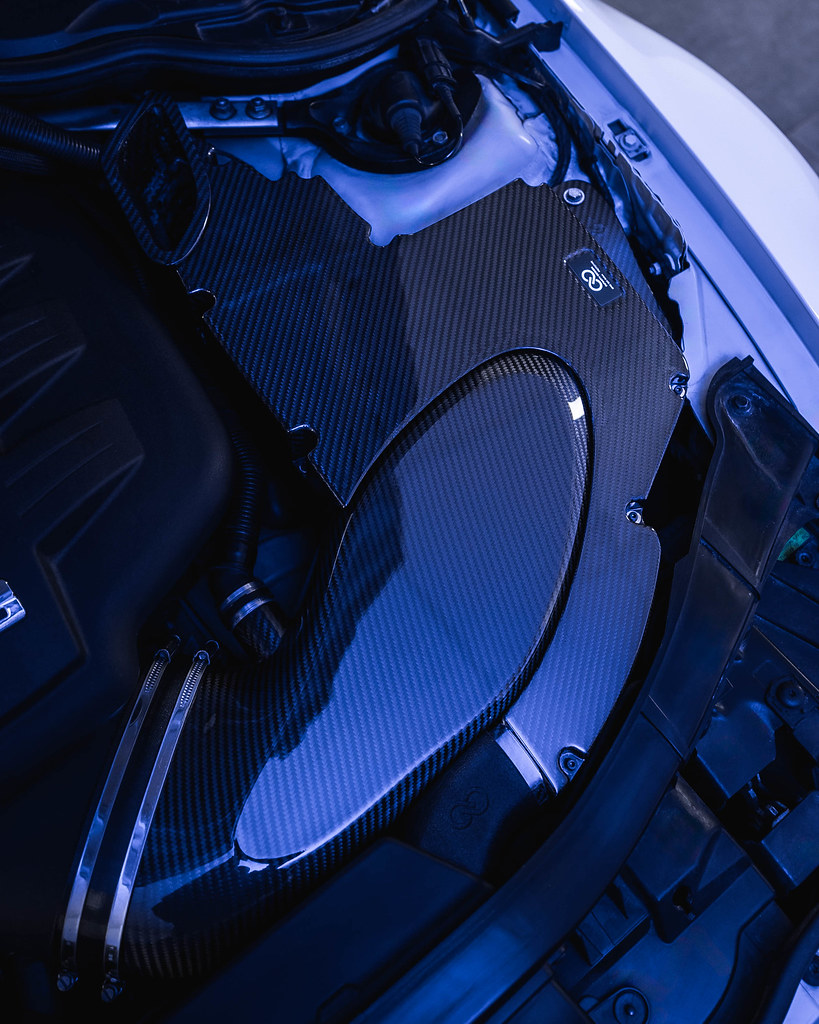
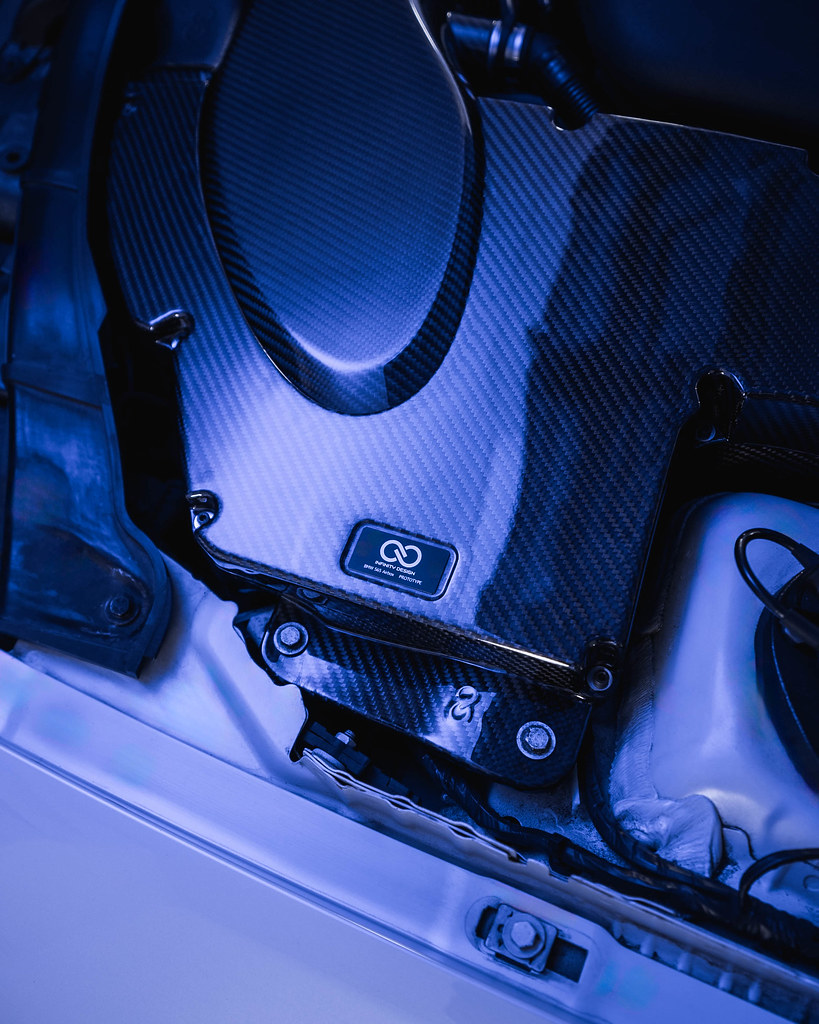
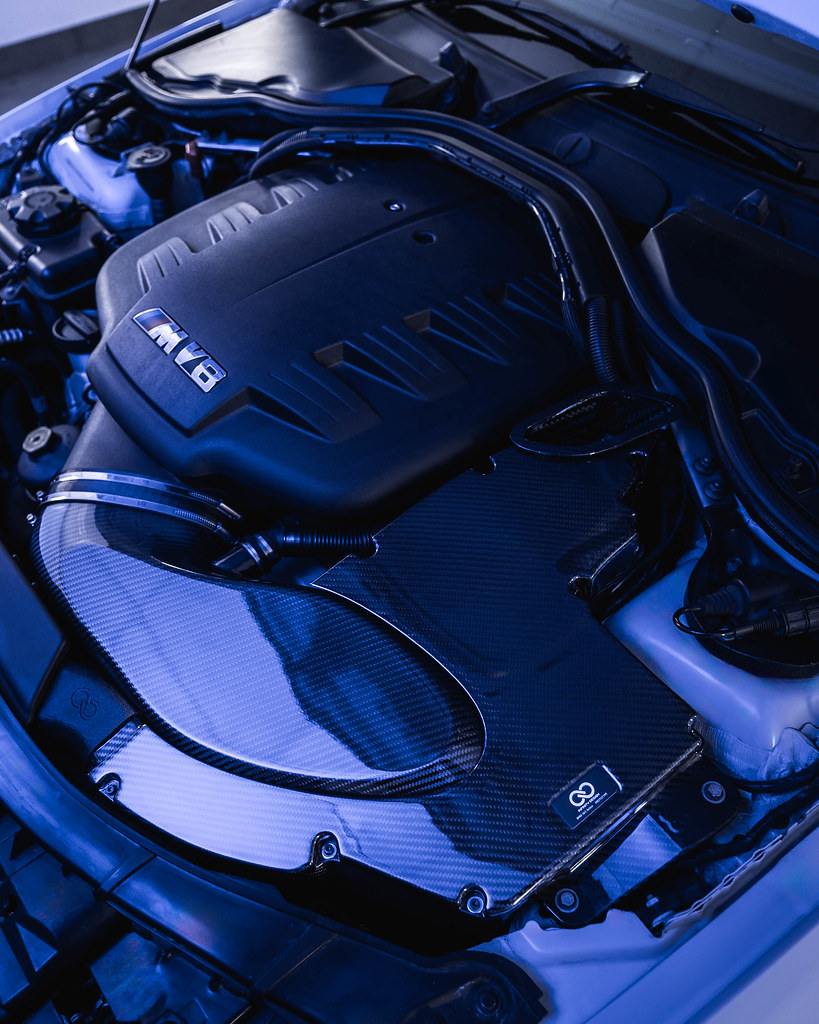
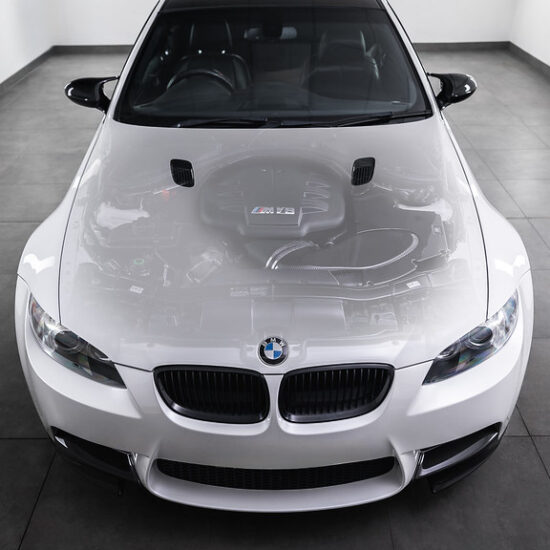
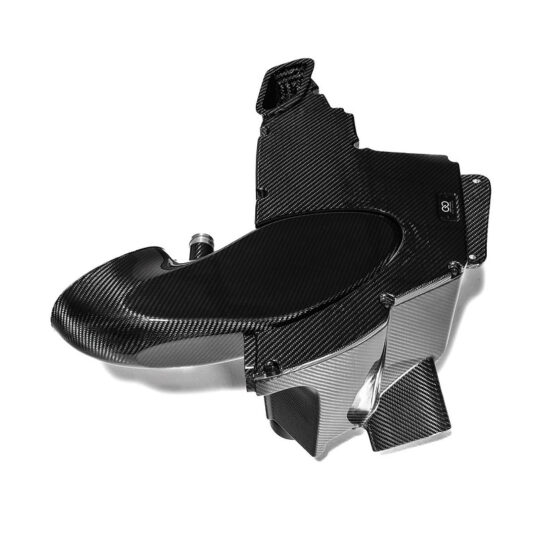
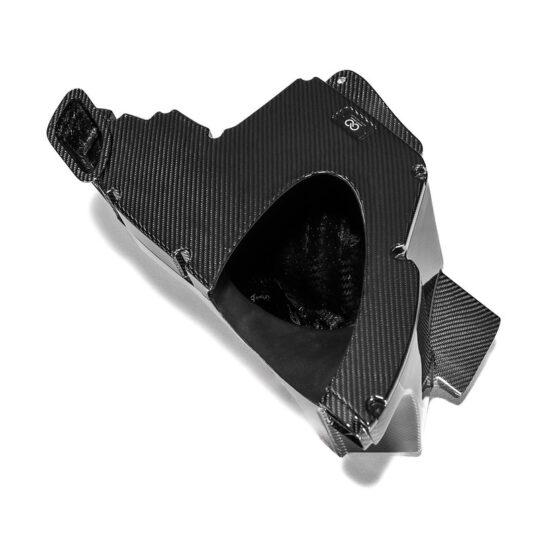
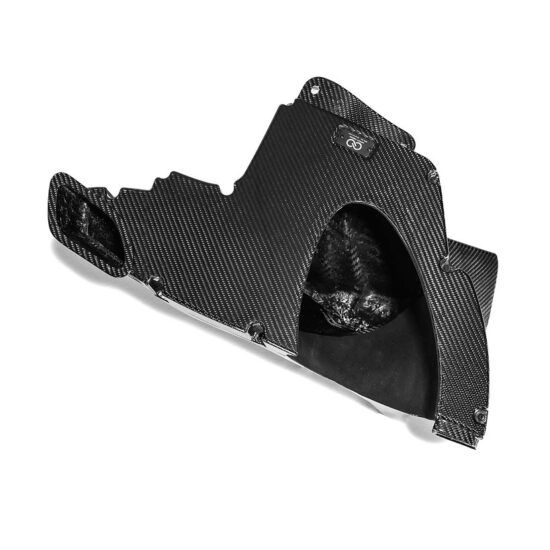
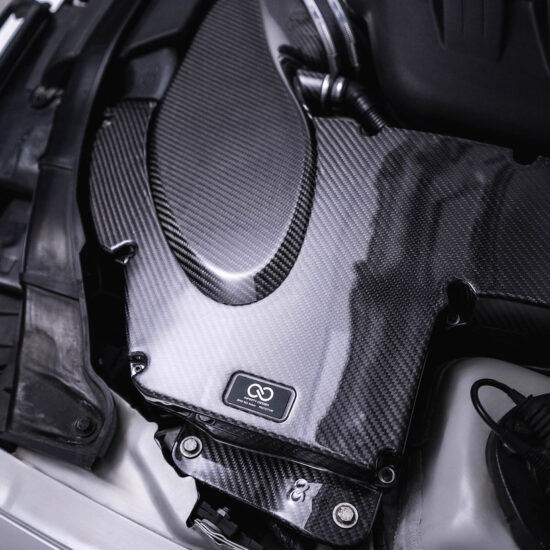
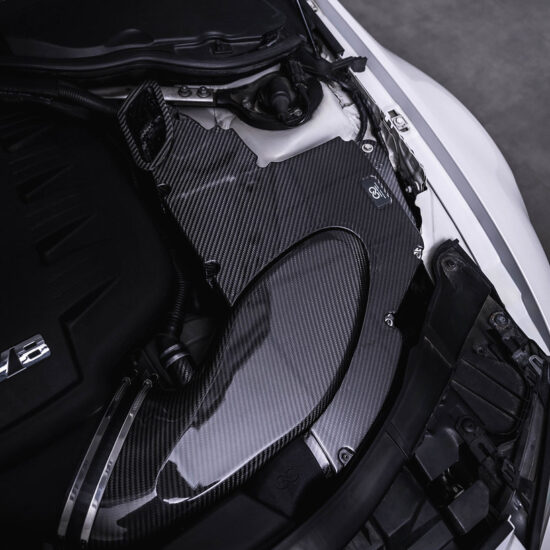
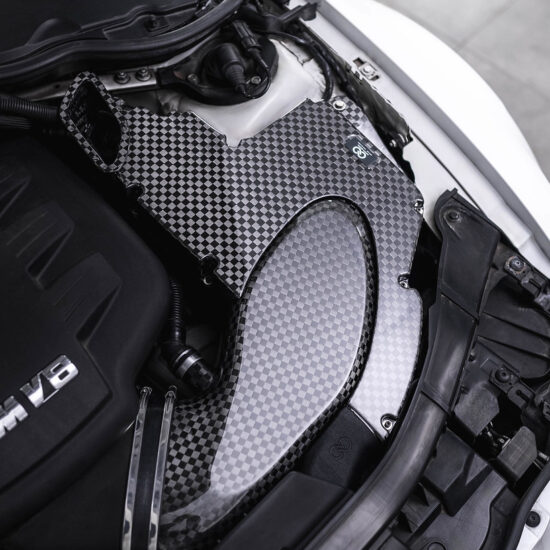
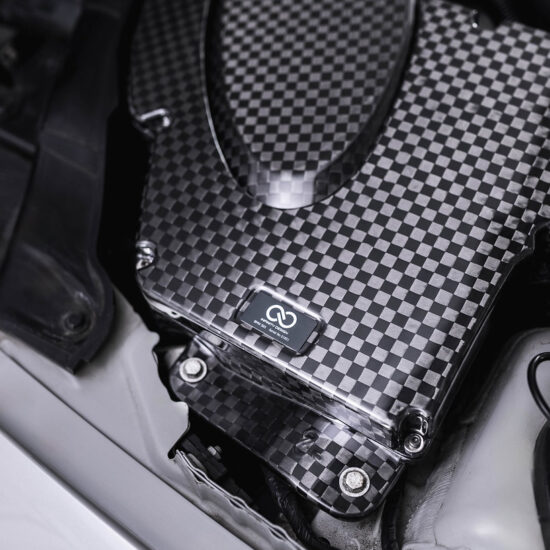
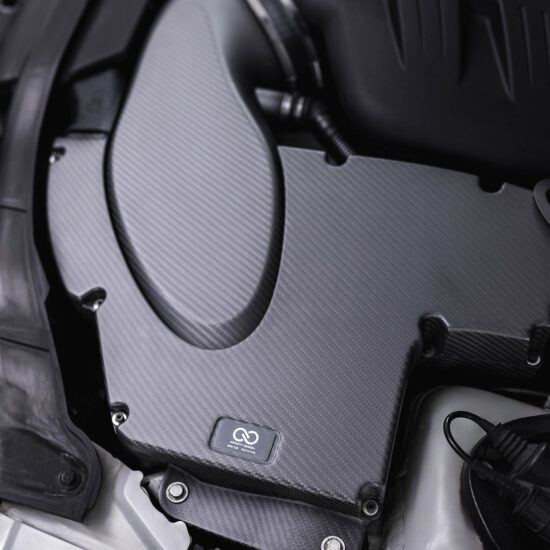
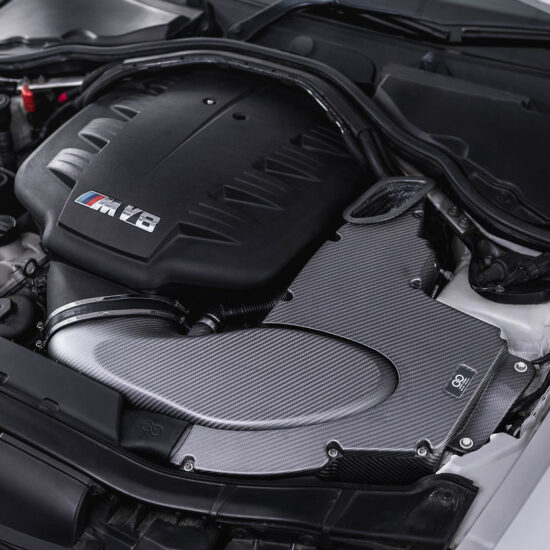
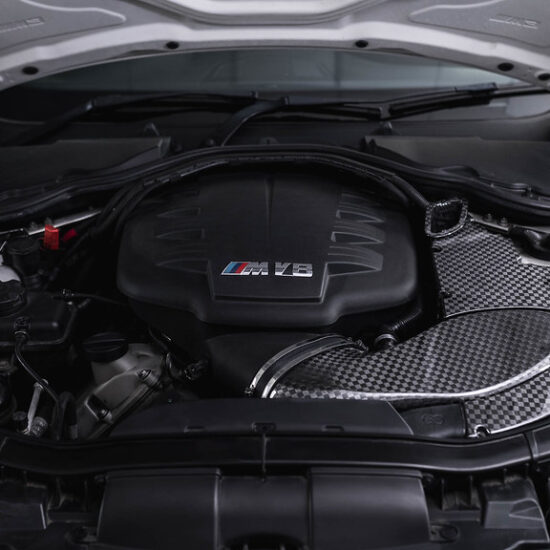
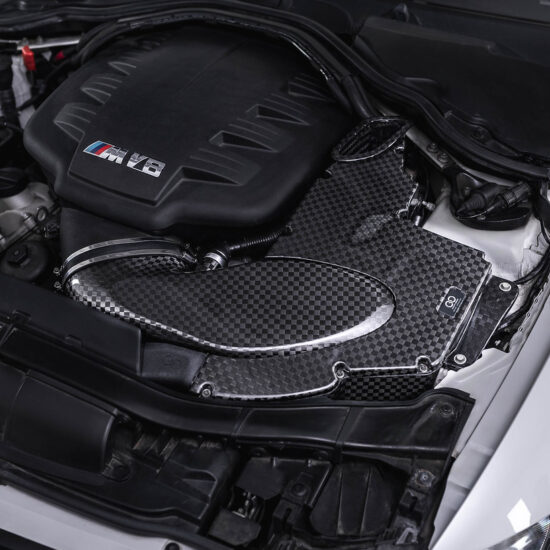
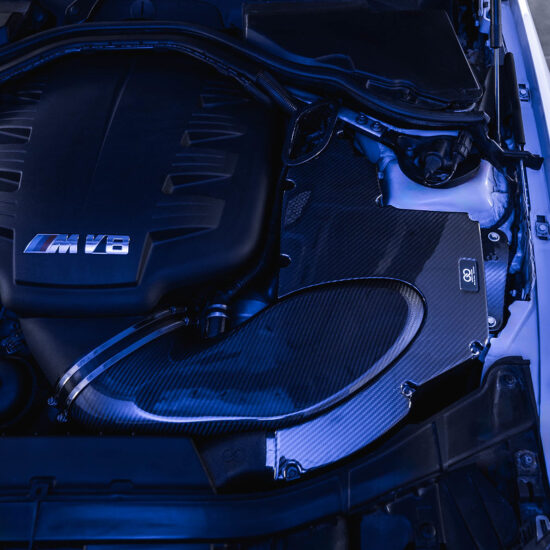
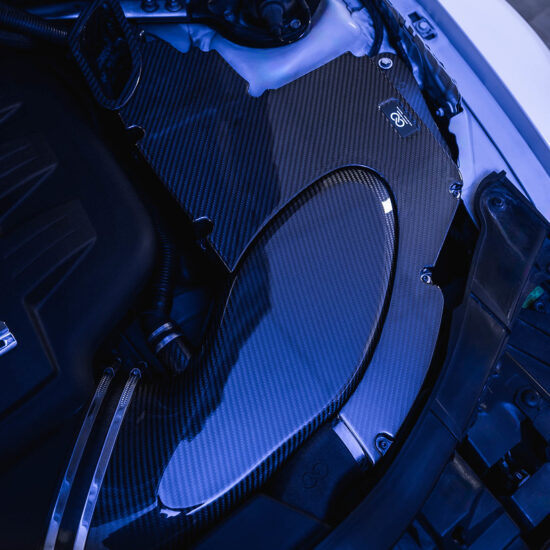
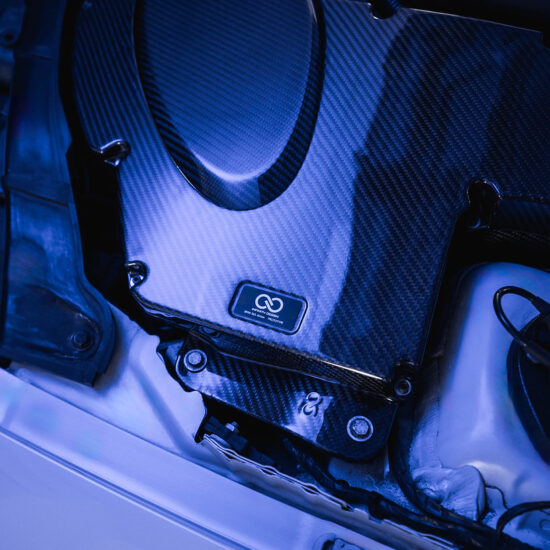
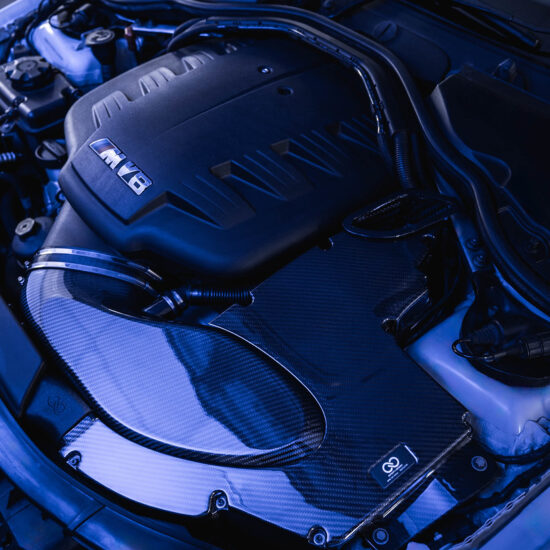
Infinity Design Carbon Fibre Intake (E9X M3)
£1,440.00
Product Highlights
+ 12-16 HP
100% Pre Preg Carbon
No ECU Tuning Required
Improved Throttle Response
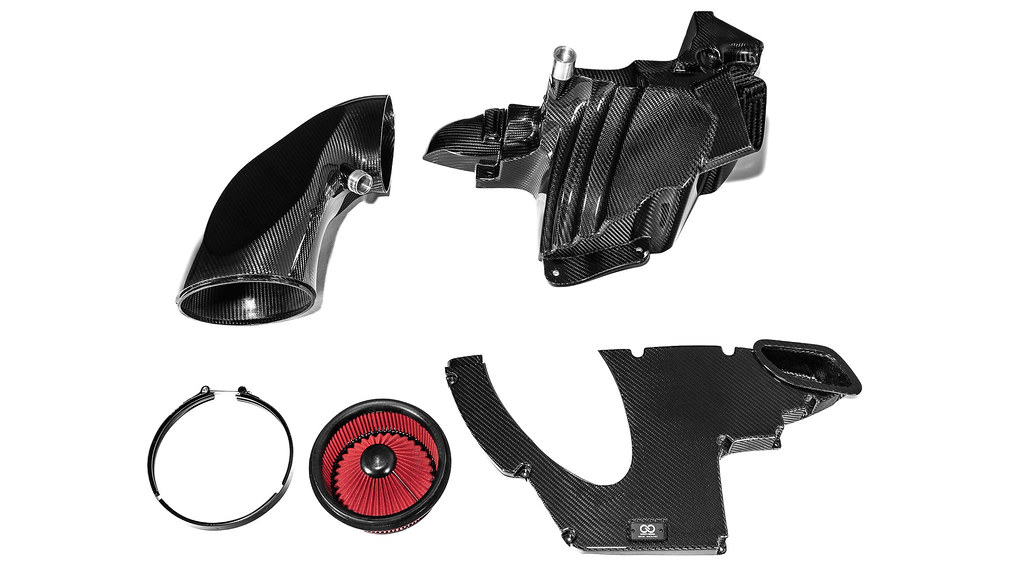
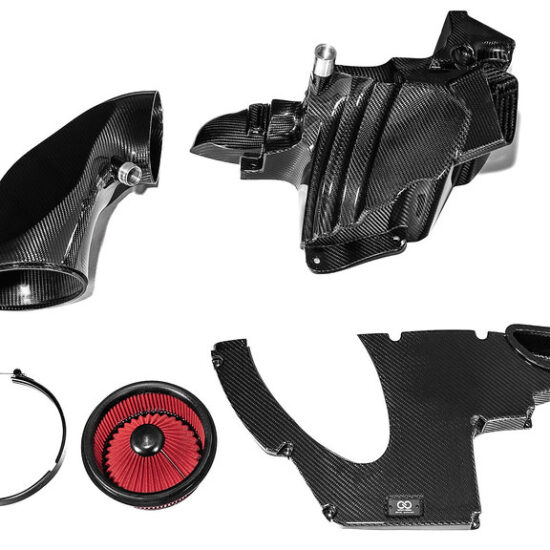
What’s in the Box
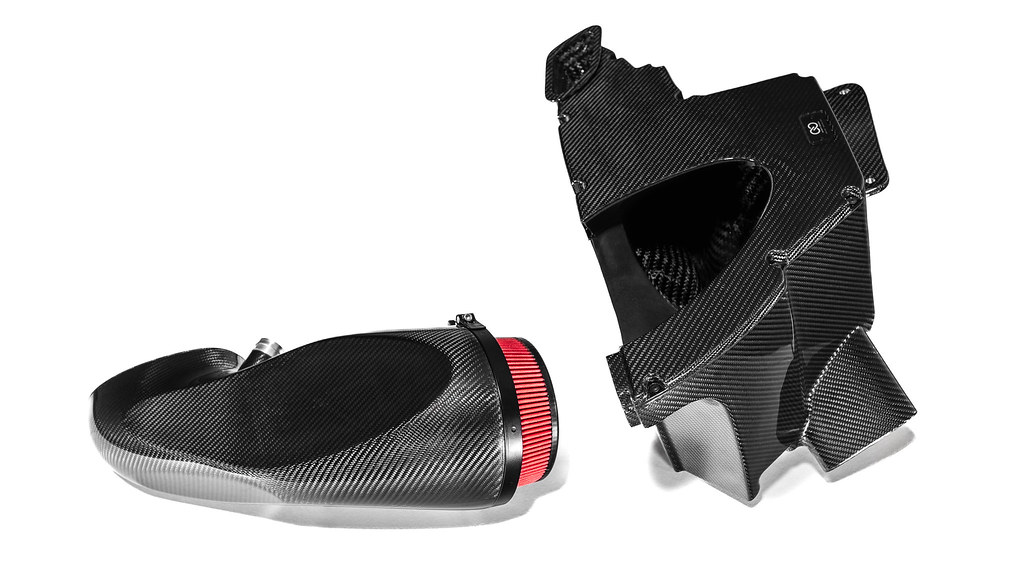
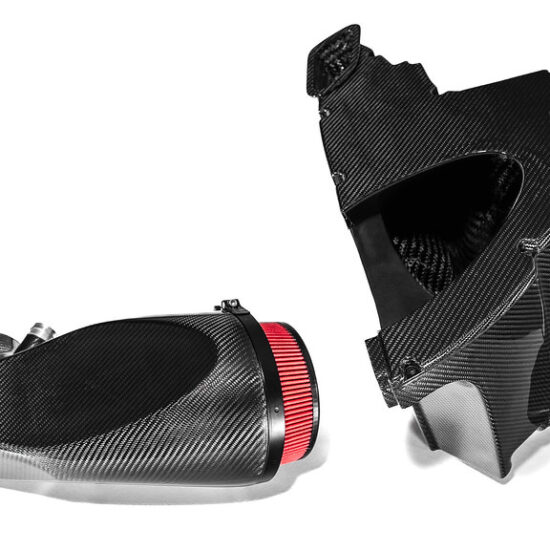
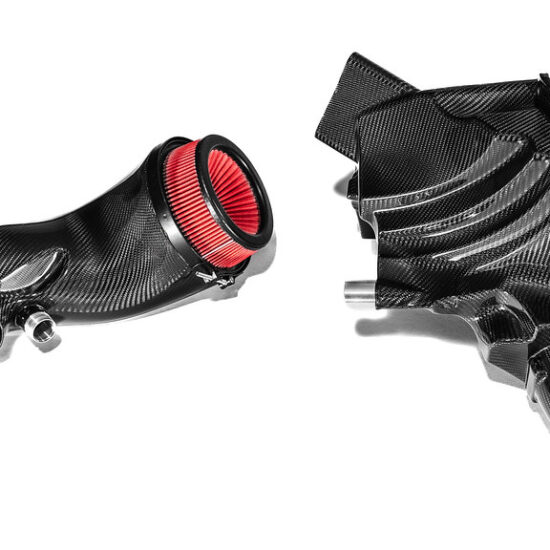
1 x Carbon Venturi Inlet Tube
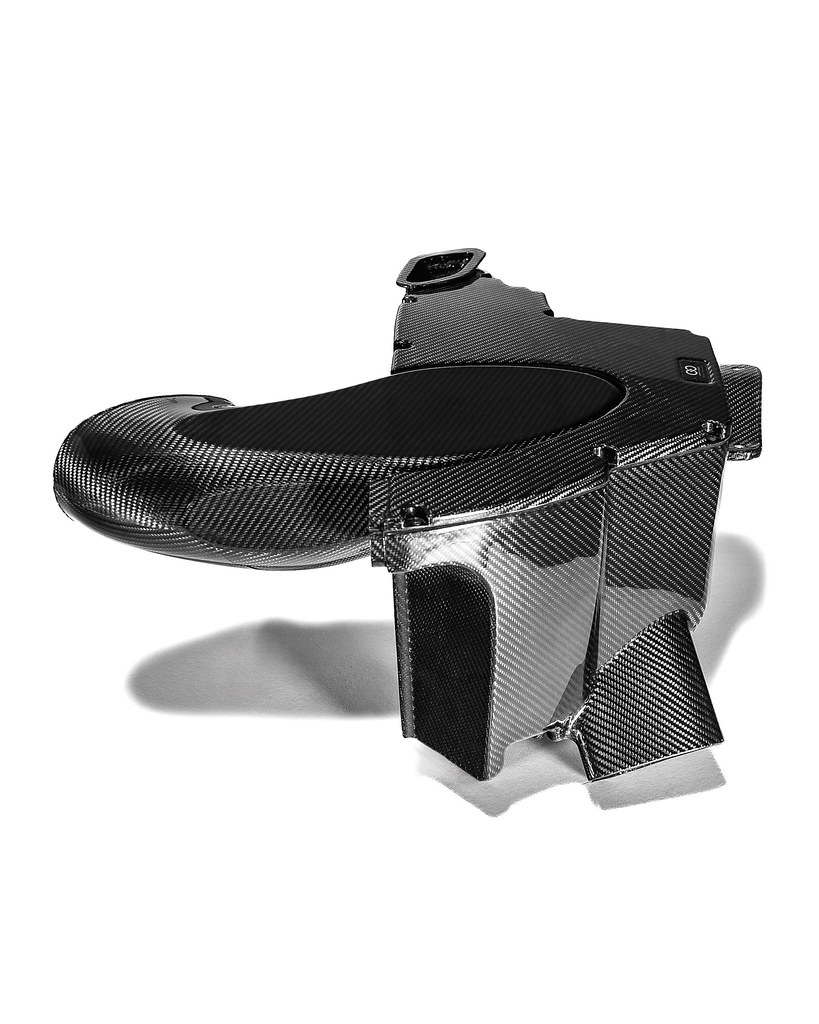
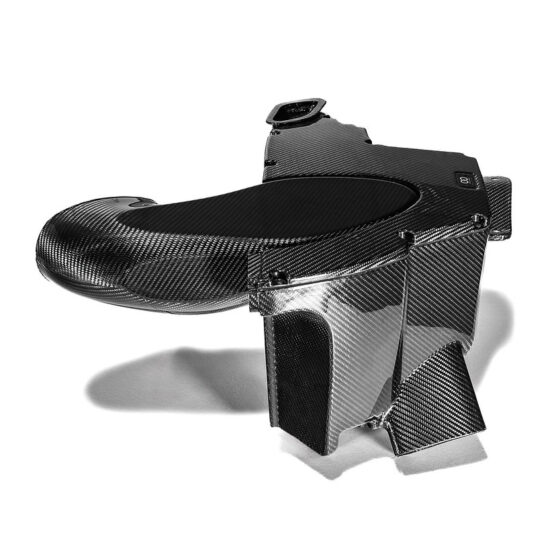
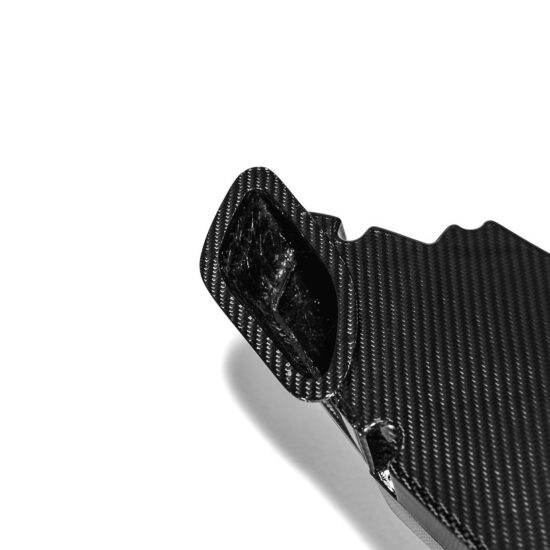
1 x Full Carbon Lower Airbox
1 x Carbon Lid
1 x Air Filter
1 x Clamp
1 x Silicone Coupler
1 x Silicone Joiner
- Description
Description
Design
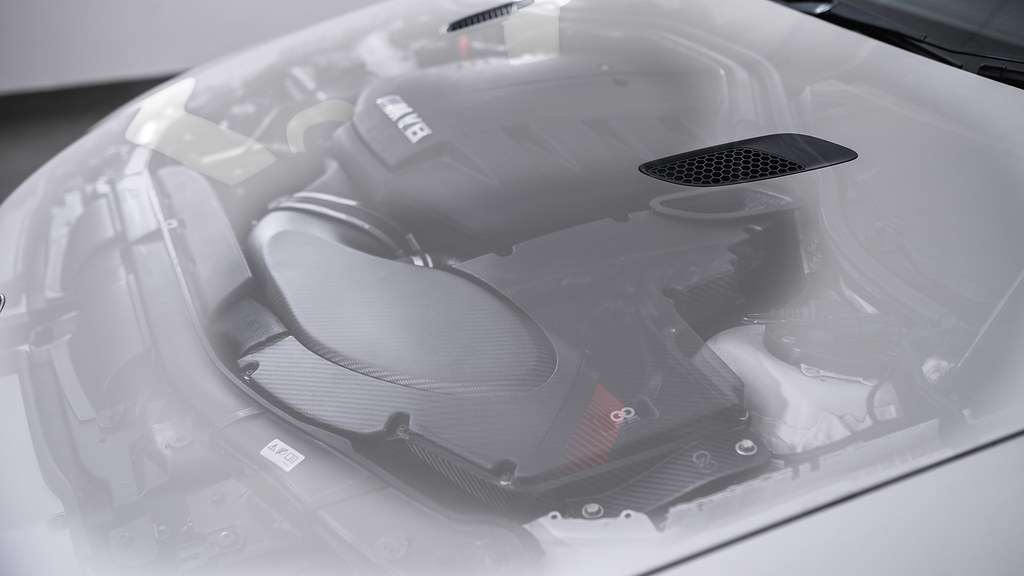
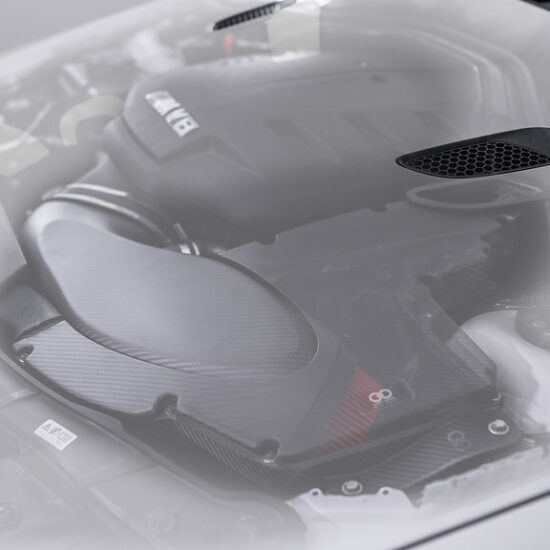
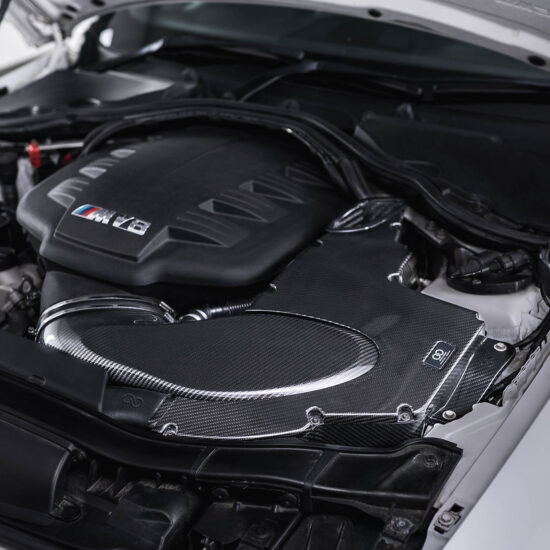
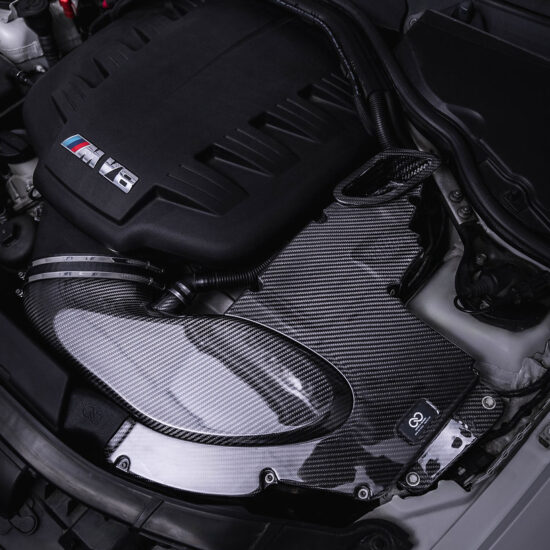
For this application Infinity have opted to do a complete redesign of the entire airbox. The factory intake elbow reduces in size considerably from the plenum opening to the airbox. Increasing the size or smoothing the inlet elbow has been the norm for most intakes with little to no effect in power. The effect on airflow is minimal even if there is an increase in size after going through the restrictive and small area through the OEM airbox. Infinity’s design strategy was to create an inlet tube which kept the cross sectional area of the plenum opening consistent and enlarged it. In order to accomplish this they needed to redesign the complete airbox to allow such a large tube to pass through it. The end result is a inlet tube which is significantly larger in volume and cross sectional area which slowly increases in size as it goes to the large surface area air filter. The plenum can now take in air to its maximum capacity as the cross sectional area remains the same and increases.
High Flow Air Filters & Intake Temperatures
Infinity’s bespoke short-stack, high surface area filter larger than any cone filter design currently on offer on the market with a huge opening of 170mm and is designed to take full advantage of the intake tubes by altering the direction of the airflow towards the outer walls. By placing the air filters in front of the inlet tube Infinity achieve the largest velocity stack.
Performance Testing
Dyno tests were performed under strict controlled conditions on an independent Dyno Dynamics machine in order to show a true and realistic result. The test car was a 100% stock 2012 DCT with 62,000 miles. A healthy and genuine increase of 10-12hp | 8-10 lb/ft from 6000-8300rpm. The results shown are the highest stock result vs the highest result with the intake. This can be clearly seen from the shape of the stock dyno run as its shape is smooth and the power does not fall off at the high rpm. The stock car makes its peak power at the factory 8300rpm.
Many companies will use stock runs which are early runs in the session with high IATs which result in the ECU retarding ignition timing. This results in a graph which does not have a natural shape and flattens off at high rpm. More importantly, the upgraded airbox dyno graph does not have a torque curve which has a consistent gain through the rpm range. These types of dyno results suggest a correction factor has been used to show a false gain. The test performed here shows a realistic result as the torque curve is almost identical at low rpm and only begins to gain power after 4000rpm and especially after 6000rpm where the air demand is higher. With modified cars with exhausts which delete the highly restrictive primary catalytic converters, the results will be similar or higher.